
Collaboration
Within Grip on Life, we have tested and developed different approaches to collaboration, including Water Management Agreements, Conservation Standards, and the Smultronställe Method.
Please note: most of the material about collaboration is only available in Swedish.
Can stakeholders with different views on how natural resources should be managed find common ground? For six years, Grip on Life led an extensive collaborative process focused on the Lyckebyån and Mieån river catchments in Blekinge, helping participants develop a shared vision and way forward.
The method used is called Conservation Standards. Participants included municipalities, interest groups, landowners, and other stakeholders, each bringing their own priorities and perspectives to the process. Through structured dialogue and joint planning, the group worked together to identify challenges, opportunities, and actions for the future.
The purpose of a GYBS Agreement is to improve the conditions for achieving Favourable Conservation Status (GYBS) and to provide an effective way for two organisations to agree on how they will work towards a shared goal.
Favourable Conservation Status, or GYBS, is the overall objective for protected species and habitat types under the EU Habitats Directive. Through a GYBS Agreement, organisations can formalise their collaboration and coordinate actions to support this objective.
The Idea Bank, developed within Grip on Life, is a national collaboration platform that brings together project ideas, promotes cooperation, and makes it easier for organisations to develop projects together.
It provides a meeting place for stakeholders from across Sweden to share ideas, find partners, and build on each other’s experiences. By connecting people and organisations with common interests, the Idea Bank helps turn ideas into collaborative projects that can create lasting benefits for nature and society.
The Kalmar Model is a practical approach that guides landowners from the initial idea to the implementation of wetland measures. Its focus is on ensuring that the right measure is carried out in the right location, making the process both simpler and more effective.
Developed within the Grip on Life project in the Kalmar County region, the model is based on early dialogue, clear guidance, and collaboration between stakeholders. By bringing together relevant expertise at an early stage, it helps create well-planned wetland projects with lasting environmental benefits.
Within the Grip on Life project, the County Administrative Board of Jämtland and the Swedish Forest Agency have worked together to improve the management of forestry operations near Natura 2000 waters.
The aim has been to coordinate and streamline the authorities’ work, while developing a shared approach to the environmental considerations needed when planning and carrying out forestry operations in and around Natura 2000 waters.
Read More About the Coordinated Approach to Forestry Operations Near Natura 2000 Waters
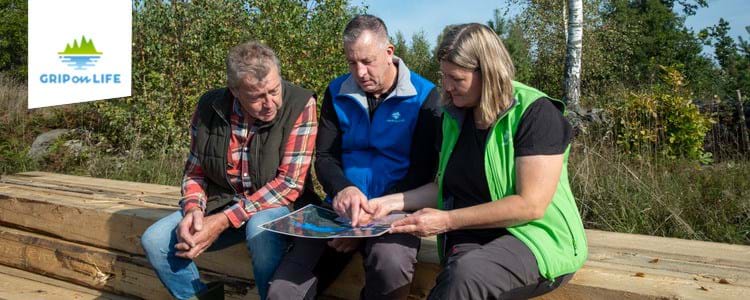
The Smultronställe Method is a simple model for collaboration based on a local perspective. By gathering knowledge and insights from landowners and local residents, it helps identify valuable places as well as local challenges within a defined area.
The method was used within the Grip on Life project in Kalmar County, where local knowledge played an important role in supporting dialogue, collaboration, and the development of conservation measures.
To help protect valuable water environments, the County Administrative Board of Jönköping has developed a new approach: Water Management Agreements. The method enables important watercourses to be protected quickly and over the long term through collaboration with landowners.